Advancing Humanity Towards Arcologies
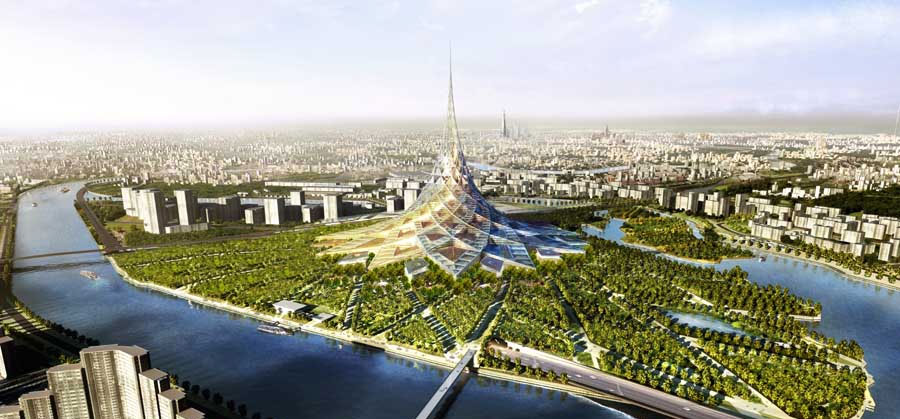
The Earth can be restored to an ecological paradise. Humans have the capability to cut their footprint on the Earth in half by replacing our cities and suburbs with Arcologies.
Traditionally an acre, or 43,560 sqft, could feed a person. Modern farming can do an order of magnitude better. Today, with climate controlled greenhouses using advanced hydroponics, a single human can be fed on ~2200 sqft.
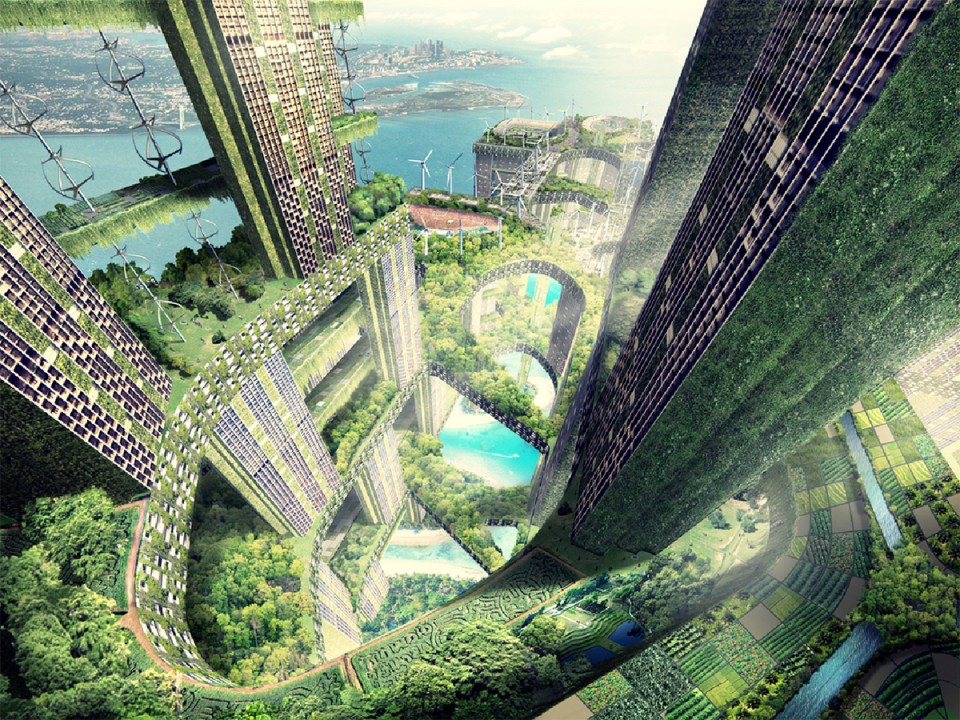
It is conceivable to grow enough food for one person through vertical farming on the equivalent space of one large apartment or the basement of a house. Traditionally, households have more than 1 person, so current buildings do not have enough basement or floor space to be retrofitted to provide the food for an entire household.
By dedicating 10,000 sqft of space to each human to fulfill their residential, commercial, recreational, and agricultural needs, it is possible to house a full self sustaining city of 5,000 people in a 100 story building that is 800 sqft in diameter. To house the entire human population, these buildings need only be placed along the world coastlines, spaced half a mile apart. This would leave the the rest of the planet as ecological park space.
Growing crops inside an Arcology may be prohibitively expensive based on today's economics, as the price of farmland is $1/sqft vs the construction cost in a vertical building at $1,000/sqft.
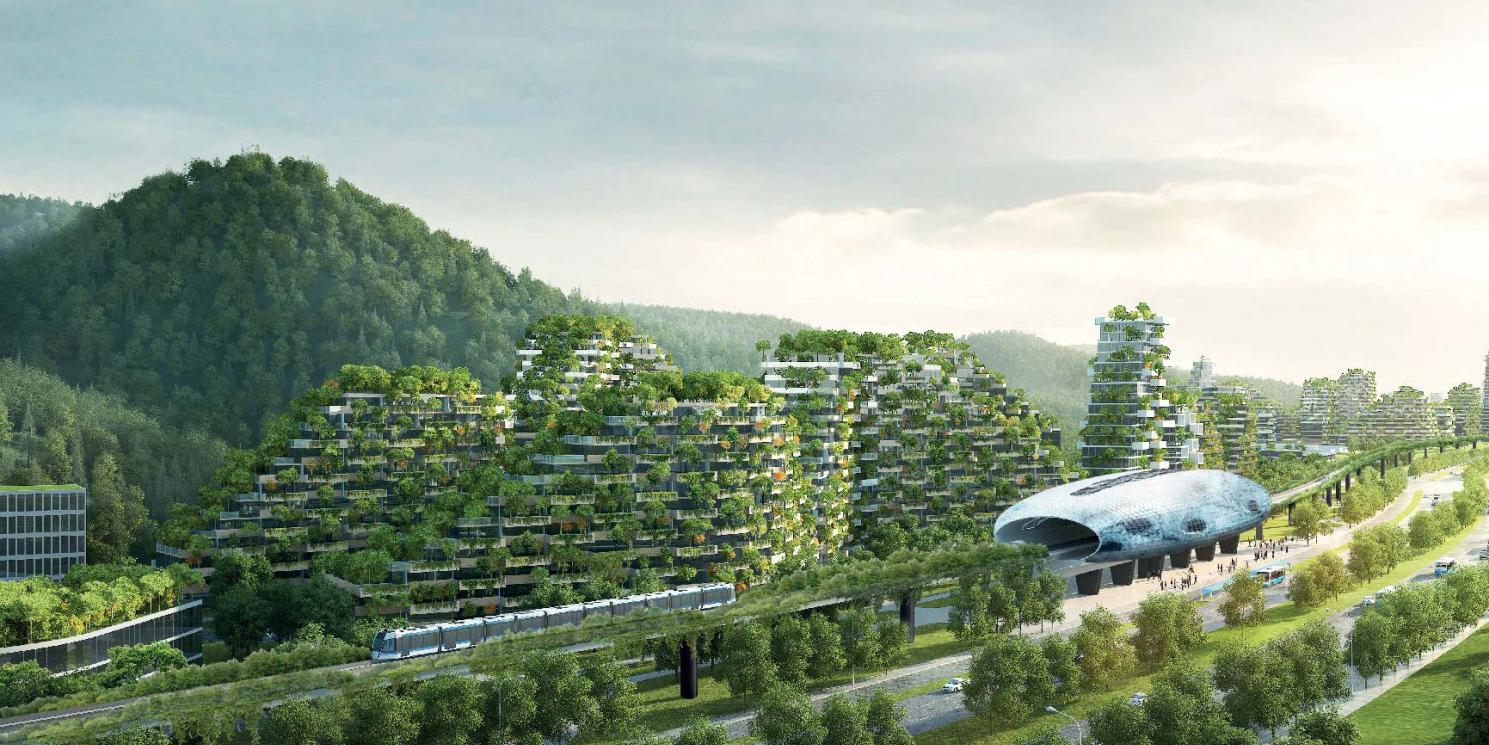
In addition, the lighting costs of growing crops inside Arcologies using artifical light are currently economically infeasable without the creation of Nuclear Fusion Power. Once fusion becomes possible, this concept could be extended to support all of humanity living in large buildings.
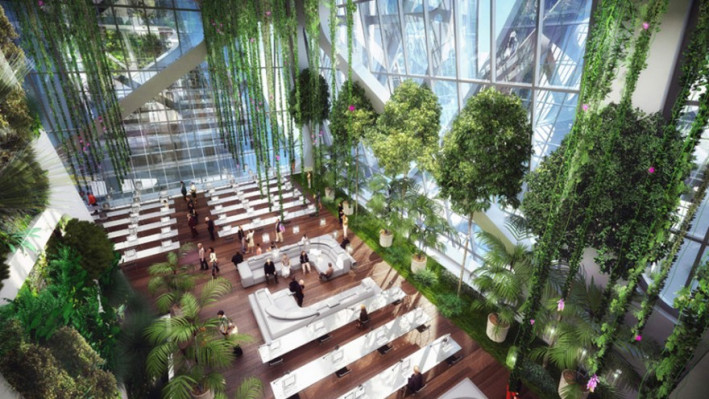
While fusion power is likely to be available in years to come, we do not need to rely on fusion to achieve this vision. Without fusion power we can instead place a half mile of farmland outside of the buildings; less if using layered hydroponics. This would increase our footprint to 3% of Earth's livable area but still achieves the vision of Earth as an ecological paradise.
Techniques like Polyculture can provide higher yields than monoculture, but at scale it is prohibitively labor intensive due to our lack of robotics and advanced harvesting technology. Lawns are more popular than gardens for this same reason. Lawns can be effortlessly maintained with a lawn mower versus providing specialized care for each complex species of plants in a robust garden.
Robotics have only recently started to enter the market in the lawn mowing space. With the invention of more sophisticated robotics that can intellegently prune trees, weed gardens, and water different plant species, we will see complex gardens replace traditional lawns. Having a beautiful garden in front of your house will otherwise be more advantageous and beautiful than a traditional lawn.A step further and we can quickly get to a place where personalized robotics could tend to fresh produce in your garden and deliver them to your home before meal time, a Micro-Arcology.
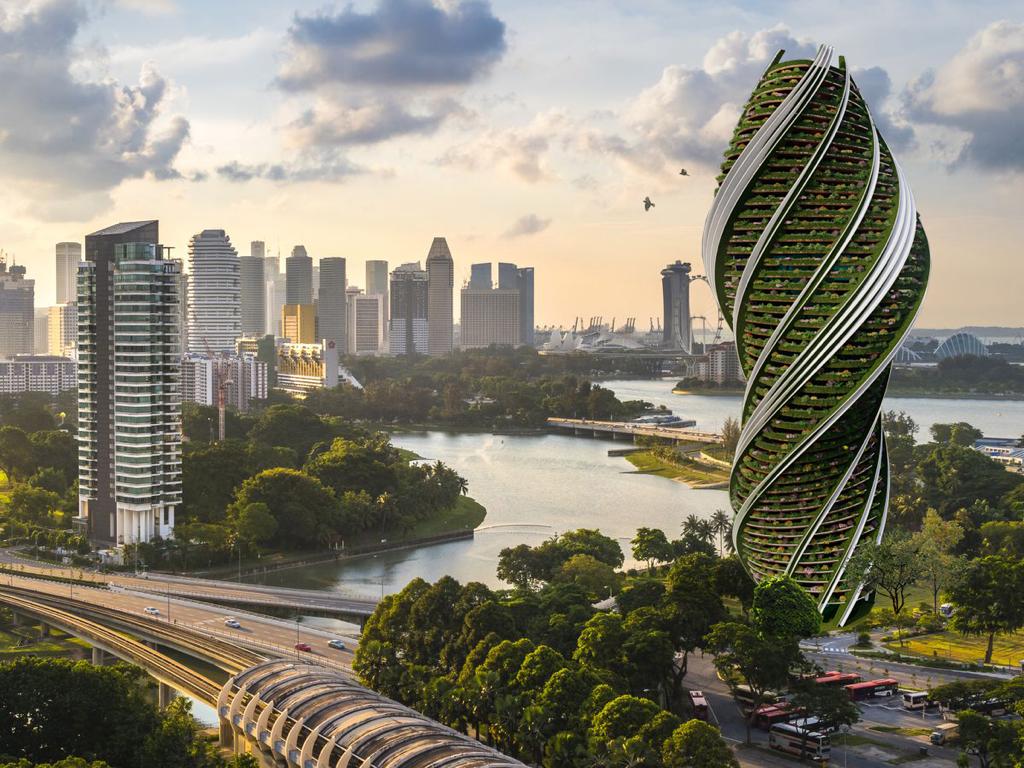
The Master Plan
We can advance humanity towards Arcologies in a series of smaller commercial endeavors, each phase generating technology and funding to seed the next. This can be done similarly to how Tesla and SpaceX apply the profits of each product innovation to fuel the next.
- Phase 1 - Robotic Lawn Mowers
- Phase 2 - Fertilization Drones
- Phase 3 - Agriculture Robotics
- Phase 4 - Advanced Polyculture Robotics and Micro-Arcologies
References
The Numbers Arcology: City in the Image of Man by Paolo Solieri
Referred in
Robotic Lawn Mowers
As the first phase of Advancing Humanity Towards Arcologies we can begin to develop the advanced robotics needed for Polyculture and…
Startup Ideas
Advancing Humanity Towards Arcologies Pair Programming as a Service Validation as a Service Anomaly Detection As a Service (SHeX, SHACL…
If you think this note resonated, be it positive or negative, send me a direct message on Twitter or an email and we can talk.